Handling Guest Damages Airbnb India
How to Handle Guest Damage on Airbnb in India
A guest might break a glass or tear a bedsheet. If you've been hosting long enough, something has probably gone wrong. Here's how to deal with it — and how to prevent most of it.
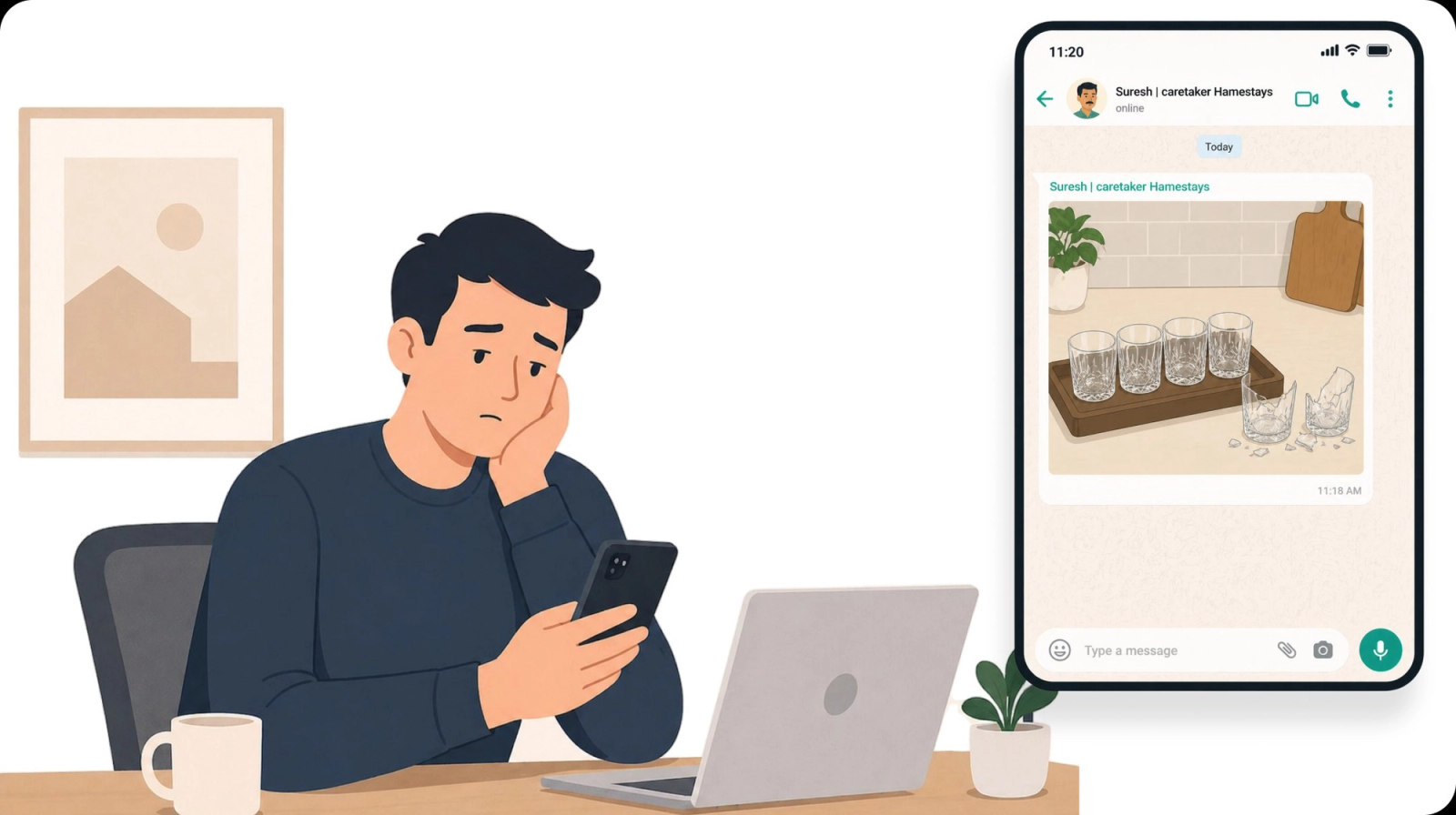
Small accidents with guests happen a lot. A broken item, a stain, something missing after checkout. Some of it is honest. Some of it is careless. Either way, you're left handling it.
A lot of hosts we know have been through this. The ones who dealt with it well weren't the ones who got lucky — they had a plan.
As we've all heard — prevention is better than cure. So let's start there.
Prevention
How to reduce damage before it happens :
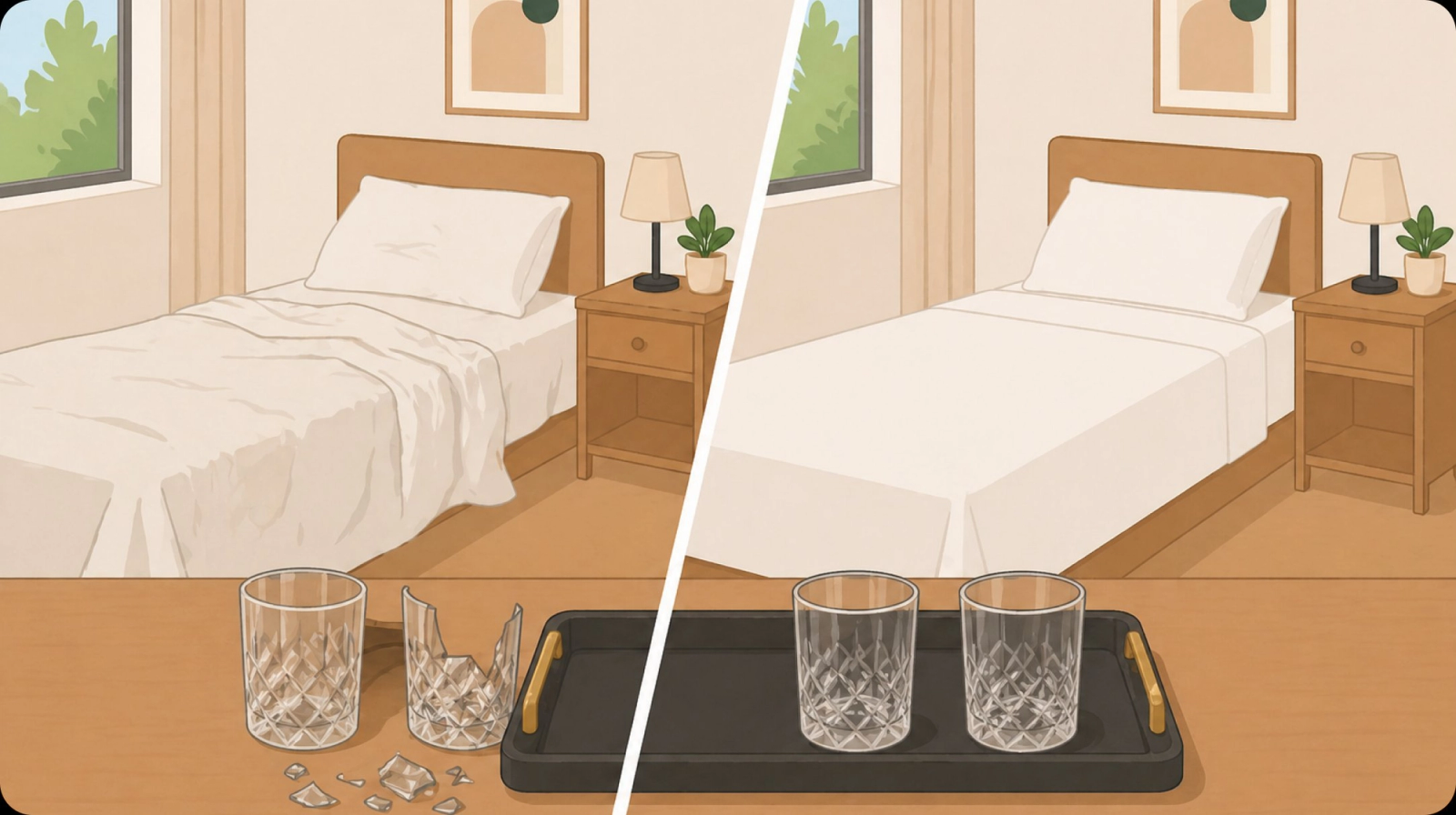
01 Guest Screening
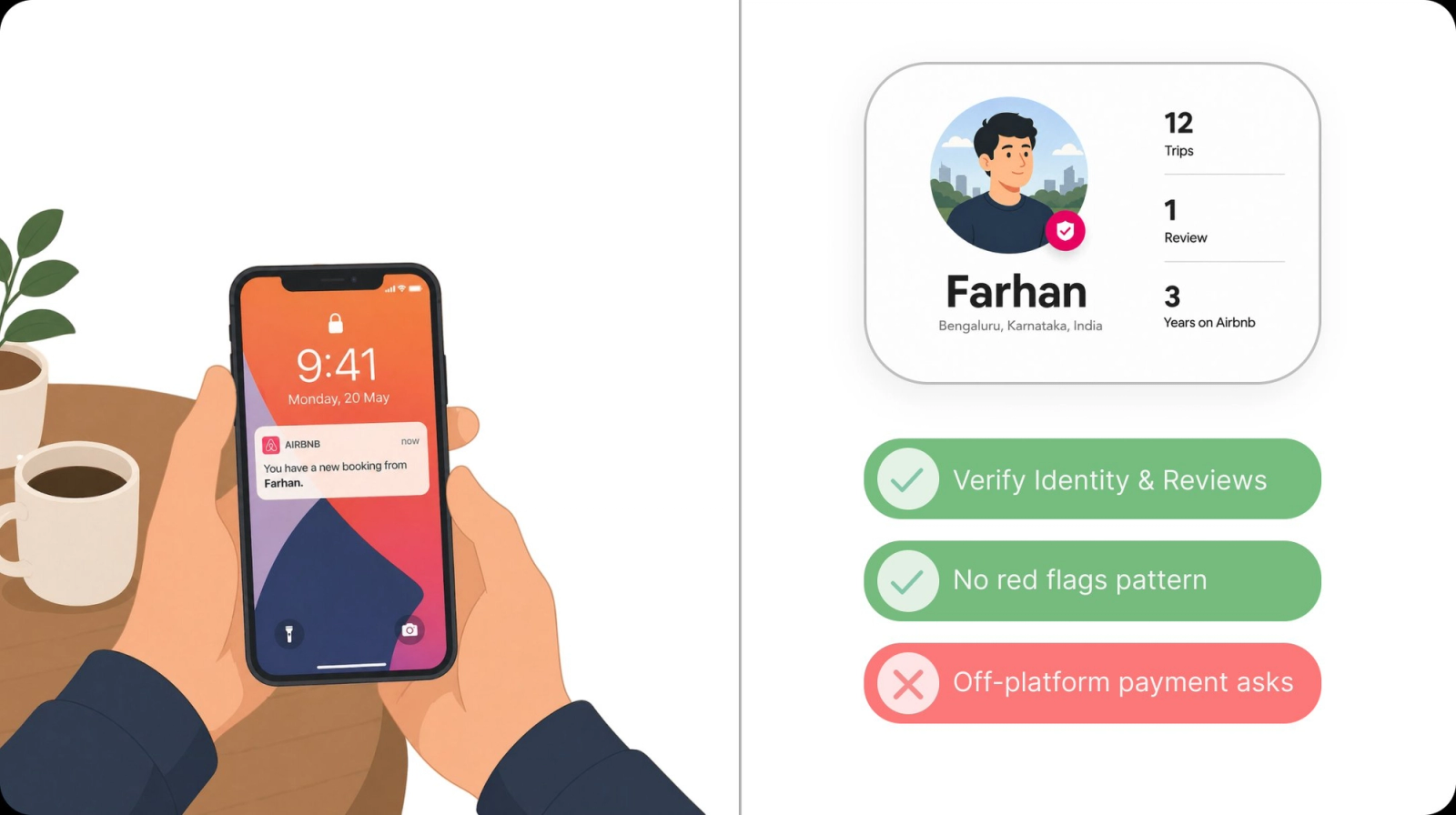
Check the profile before you accept :
Airbnb's review system is your best tool here. Before accepting a request, go through the guest's profile.
- No reviews — not always a problem, but worth a quick message. Ask about the trip, how many people are coming.
- Vague reviews from other hosts — "left the place okay" often means something went mildly wrong. Read between the lines.
- Local booking + new account + weekend date — this combination comes up a lot before misuse situations.
02 ID Verification
Know who actually checked in :
Airbnb does basic identity verification — but it's a platform checkbox. For remote stays or multiple properties, that usually isn't enough.
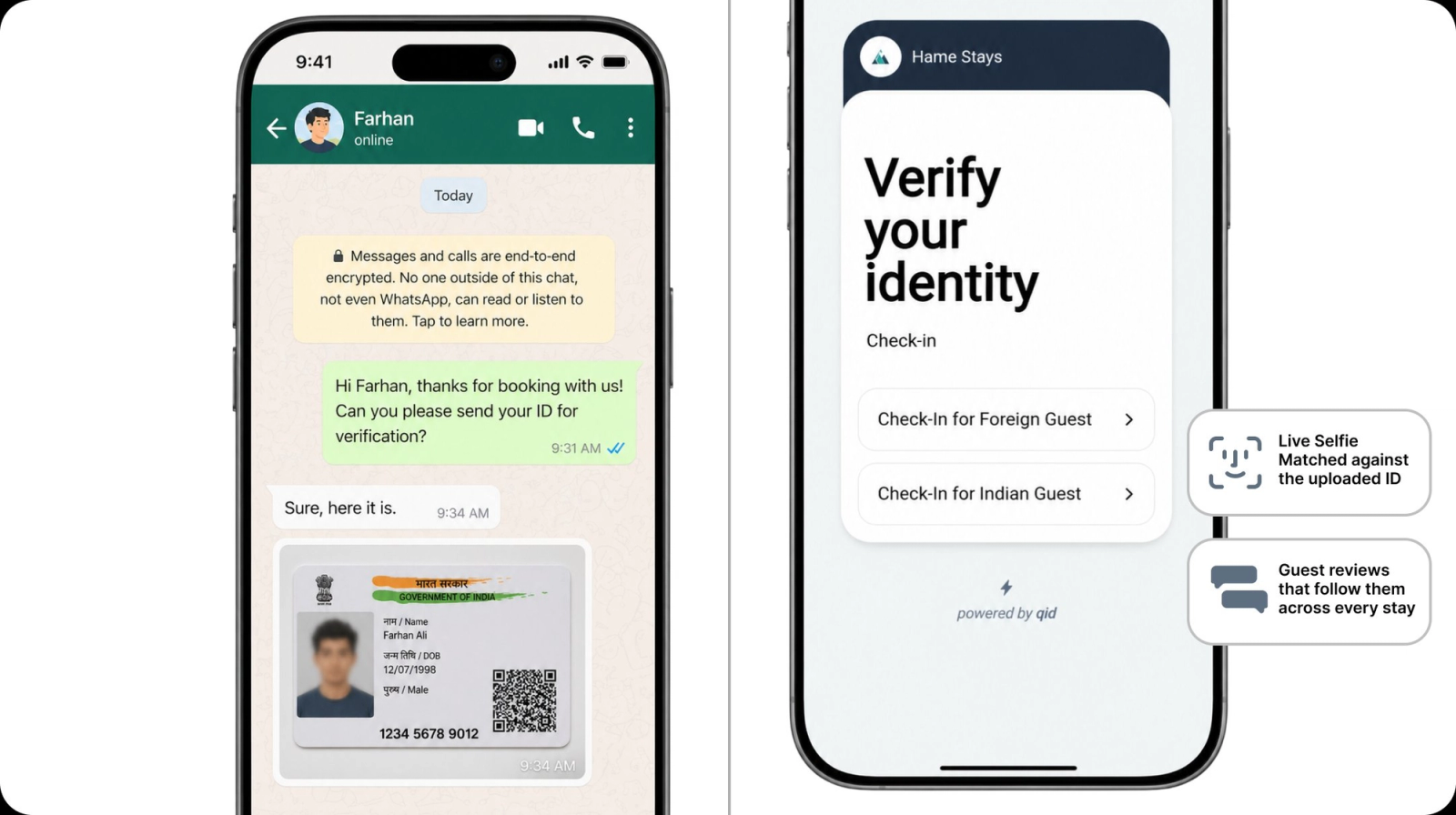
The simplest step is to ask for a government ID before check-in. Most hosts do this over WhatsApp. It works — but the photos are blurry, stored nowhere, and not something you can actually use if something goes wrong.
If you want to go a step further, you can use a tool like qid — the guest uploads their ID and takes a live selfie, and the two are matched automatically. Not just a photo of a document.
Bonus if you're using qid : it has its own guest review system that works across all properties on the platform — other Airbnbs, hotels, hostels. So you get a second layer of history on top of Airbnb's reviews. A bit like a 2FA for guest trust.
When a guest knows their ID is properly on file, they tend to be more careful. Not a guarantee — but it helps.
03 Damage Policy
Be clear about your damage policy before check-in :
Most hosts have house rules. Most guests skim them. A few things that actually get read:
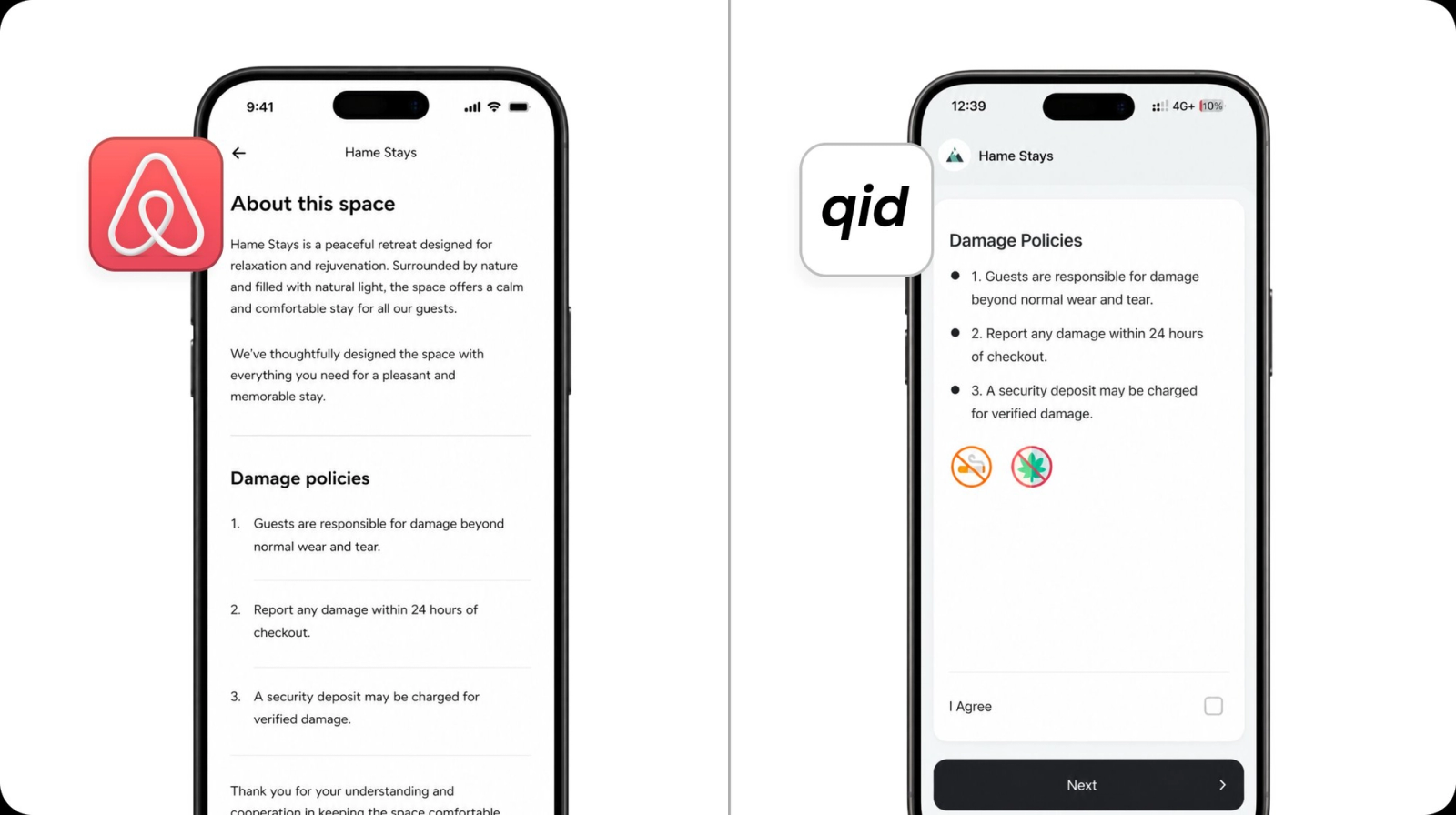
- State in your listing that guests are responsible for damage beyond normal use.
- If you're using qid, you can include your damage policy in the check-in flow — the guest reads it before they get the door access.
- Mention it once in your pre-arrival message. Short and matter-of-fact.
When guests know the terms before they arrive — and know their ID is on file — they tend to be more careful with the property.
Cure
What to do when damage has already happened :
04 Airbnb's Policy
How Airbnb's AirCover works :
Airbnb's Host Damage Protection — part of AirCover for Hosts — covers up to $3 million in damage caused by guests. It applies automatically to every booking, at no cost to you.
Here's how the process works:
- 1 Document the damage first Photos, videos, repair estimates. Do this before touching anything.
- 2 Submit through the Resolution Center The request goes to the guest first. They have 24 hours to respond.
- 3 If the guest doesn't pay — involve Airbnb If they don't respond or refuse, Airbnb steps in to review the claim.
- 4 14-day window — don't miss it Everything has to be submitted within 14 days of checkout. After that, the claim is closed.
Worth knowing: AirCover is not insurance. It covers guest-caused damage — not wear and tear, not cash, not natural disasters. Payouts in India can take time. Treat it as a safety net, not a guarantee.
Read Airbnb's Host Damage Protection page →
05 Host Experiences
What other hosts went through :
Insights from fellow superhost’s :
Siddhartha and PavikaThe Pause Project · Award-winning Airbnb, Goa

In his words
- Early on, every small damage bothered us — a broken glass, a stain, a torn bedsheet. We'd politely ask guests to pay. Sometimes we let it pass. Asking always felt like a confrontation.
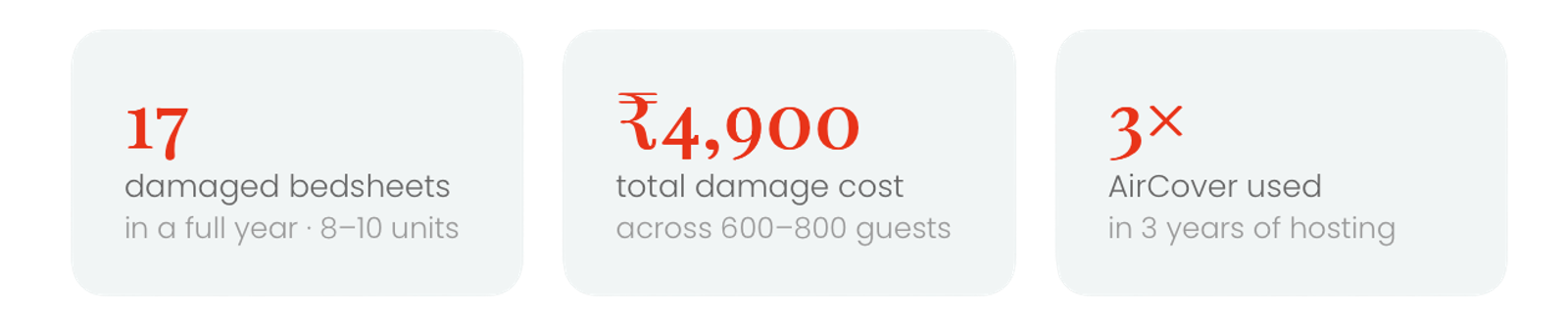
- After 14–15 months, running 8–10 units, we collected all damaged bedsheets from the past year to use during Holi. There were only 17. At ~₹300 each after depreciation — ₹4,900 for the whole year, across 600–800 guests.
- After that, we almost never asked guests to compensate. Broken bottles, broken cups — we stopped following up. We appreciate when guests tell us something broke, so we can deal with any safety risk immediately.
- We do ask when the damage is significant — a brand new comforter with permanent Maggi stains, for example. Once, a guest damaged an entire room: all curtains pulled out, rods destroyed, lampshades broken. That was ₹15,000. We followed up until it was paid.
- We've used AirCover only 3 times in 3 years — each claim around ₹3,000.
More important is that the guests should remain safe. We appreciate it when they inform us — because we know they're coming from a good place, and we can help solve for the immediate risk to them.
Guest damage is part of hosting. You can't prevent all of it.
But get the prevention side right and most situations never reach the cure stage.
Want to know exactly who's checking into your property?